

How PT Can Combat Carpal Tunnel Syndrome
Candace was a hairstylist who loved her work. Every day, she looked forward to chatting with her customers as she helped them look their best. After ten years in the business, she had built up an impressive roster of clients–but she’d also developed some worrying symptoms, too.
It started with a “pins and needles” sensation in her hands and fingers, especially at night. However, as time passed, she began to experience the sensation at work. Between appointments, Candace frequently found herself shaking out her hands, trying to alleviate her discomfort.
Eventually, that tingling sensation became more pronounced, and it was often accompanied by pain throughout her hand. Candace started to find once-simple motions–like snipping off dead ends or giving a vigorous shampoo–much more difficult.
That was when Candace visited the team at Taylor Rehab. We reviewed her symptoms, examined her hand and wrist, and gave her the diagnosis: carpal tunnel syndrome. We also provided a wealth of non-surgical treatments to help Candace manage her condition so she could go back to making her clients feel beautiful.
Are you experiencing similar symptoms? Have you recently received a carpal tunnel syndrome diagnosis? Our team can help you, too. Call us today to learn more!
What Exactly Is Carpal Tunnel Syndrome?
Because carpal tunnel syndrome is relatively common, most of us have a vague idea of what it entails: mainly that it involves the hands, fingers, and wrists and that it’s associated with certain jobs (like computer work).
These two things are true but don’t provide the complete picture. Carpal tunnel syndrome gets its name from the carpal tunnel, a structure of bones, ligaments, and tendons that runs from your wrist into your hands. It serves as a passageway for the median nerve, one of the major nerves in your upper extremities.
Carpal tunnel syndrome occurs when the median nerve becomes trapped in the carpal tunnel, leading to the many symptoms we associate with the condition:
- Weakened grip
- Pain or numbness in the hand
- Numbness, burning, or tingling in your fingers
- Swelling in your fingers
- Pain or numbness that increases at night
These symptoms usually develop gradually. At first, you may only experience them at night. But if you leave the condition untreated, you’ll begin experiencing symptoms during the day, especially after small hand movements (as Candace experienced).
Treating Carpal Tunnel Syndrome with Physical Therapy
If your carpal tunnel syndrome is still in the early stages, we’ve got good news: physical therapy alone may be enough to manage your symptoms! Experts recommend addressing carpal tunnel syndrome with conservative methods before opting for surgery–an approach that can save you money in the long run.
Here’s what we’ll do:
- Offer drug-free pain management: We can show you different options for managing hand pain, such as deep tissue laser or dry-needling.
- Develop strategies to manage your symptoms: Many people develop carpal tunnel syndrome due to repetitive hand motions, often at their job. Adjusting your posture, using proper equipment, and taking frequent breaks during the day can all help slow the condition’s progression.
- Prescribe therapeutic exercises: Targeted finger and hand stretching exercises can help improve mobility, while strengthening exercises can help decrease symptoms.
- Provide a night splint: Splinting immobilizes your wrist at night, reducing discomfort so you can get a full night’s sleep.
Often, these techniques are enough to minimize symptoms so that you don’t need to bother with surgery at all. Unfortunately, sometimes surgery is necessary to fully manage carpal tunnel syndrome, especially if you didn’t start treatment early enough.
The good news is carpal tunnel release surgery is a relatively minor outpatient surgery. However, it will still require rehabilitation afterward, and our team can guide you through the process. We’ll help reduce scar tissue and restore strength to your wrist so you can enjoy the benefits of your procedure.
Call Us Today To Learn More
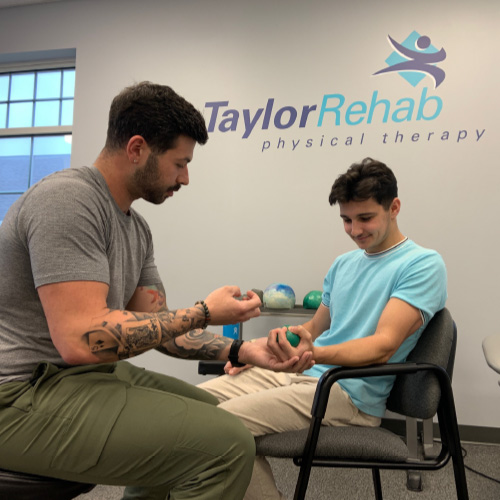
Carpal tunnel syndrome may be common, but it’s not something you have to live with. The team of physical therapists at Taylor Rehab will work with you to find a treatment plan that suits your needs, including helping you manage work tasks that might worsen your symptoms.
Ready to get started? Call to schedule your consultation today!
How Will Strength Training Benefit You?
Return to Taylor Rehab and Let’s Continue Your Journey to Wellness Together. Schedule Your Appointment Now!
Upcoming Free Workshops
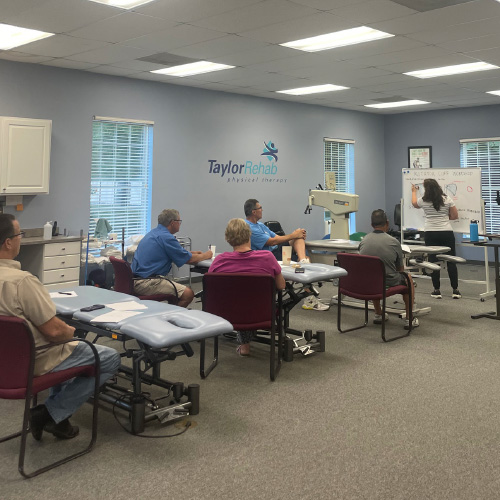
Free Shoulder/Rotator Cuff Pain Workshop
Saturday, December 7th
10:00 am
Free Shoulder/Rotator Cuff Pain Workshop
Wednesday, December 18th
5:30 pm
Thank You for Subscribing to Taylor Rehab
Patient Testimonial
“My therapists were great! I came in with 9/10 pain and I am leaving with 2/10 pain. Sam, Aaron, Zak, Jasmine, and Alicia provided caring therapy while still challenging me to continue to improve. My thanks to all-Beverly is the greatest! She is indeed the face to represent Taylor Rehab’s first impression.”
-Lougenia
Therapist’s Recipe of the Month
Jordan’s White Chicken Chili

Ingredients
- 2 lb boneless chicken breast
- 1 yellow onion diced
- 2 cloves garlic minced
- 1 can chicken broth
- 2 cans cream of chicken
- 1 can great northern beans drained
- 2 cans diced green chiles drained
- 1 can whole kernel corn drained
- salt and pepper to taste
- 1 tsp chili powder
- handful fresh cilantro chopped
- 8 oz reduced fat cream cheese softened
- 1/3 cup heavy cream
- shredded monterery jack cheese to taste
- 1/3 cup sour cream
Directions:
Cook in crockpot until desired temperature.


Taylor Rehab Reviews 🌟
Help us help more people in our community by leaving a Google Review
Follow Us on Social Media!
3 Health Tips for the Holiday Season
How busy are you this holiday season? At Taylor Rehab we understand that this time can be both joyful and hectic. In the midst of it all, it can feel easy to let your health slip through the cracks.
Are you concerned about maintaining your health this winter, but are feeling overwhelmed or don’t know where to start? If so, check out these 3 tips for staying fit during the holidays.
1. Make sure you’re getting enough sleep
With everything that goes on during December and January, it’s understandable to search for more time in the day. Sacrificing your sleep, however, will end up doing you more harm than good.
Sleep is how the body recovers and recharges. Poor sleeping habits are linked to an increased risk of heart disease, reduced cognition, and mood shifts. Aim to get 7-8 hours a night, every night.
2. Stay active
Exercise supports both your mental and physical health and is an integral part of a healthy lifestyle. The great thing about exercising is that there’s certainly no shortage of ways to get active!
From going down to the park with your kids, walking around the neighborhood, biking, doing yoga, or hitting the gym, there are many ways to make exercising fit into your busy lifestyle.
3. Don’t skip meals
With big Christmas lunches and dinners to look forward to, it can sometimes be tempting to eat less food during the day to save room for later. However, this can actually encourage you to make less healthy choices and have an unbalanced diet.
Eating one big meal a day can also increase your blood pressure and cholesterol. Instead, try to eat regular meals with servings of lean protein, fruits, and vegetables.