

June Word Scramble
cresunnse
teaaldcsns
miwsmngi
avoatnic
gdenidw
refiifsle
Answer Key
sunscreen
sandcastle
swimming
vacation
wedding
fireflies
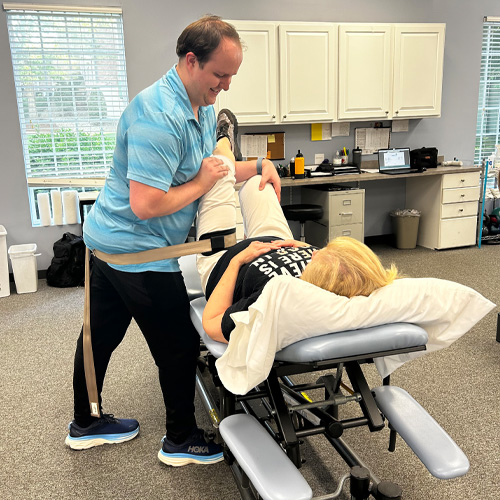
Common Sources of Hip Pain (And What We Can Do About Them)
Have you noticed a persistent discomfort in your hip? Is impaired hip mobility making it difficult for you to handle day-to-day tasks? Hip pain isn’t something you have to live with. But to resolve your pain, you’ll need to identify why you’re experiencing pain in the first place.
At Taylor Rehab, our team of musculoskeletal experts can help you determine the root cause of your hip pain. Whether it’s an underlying injury or a chronic condition like arthritis, we’ll get you the answers you need — and the relief you deserve!
Today, we want to explore some common causes of hip pain and give you some insight into how physical therapy can help. But if you’re currently dealing with hip pain, your best bet is to call us to schedule an initial consultation. Our team can give you personalized guidance to return to an active, healthy lifestyle!
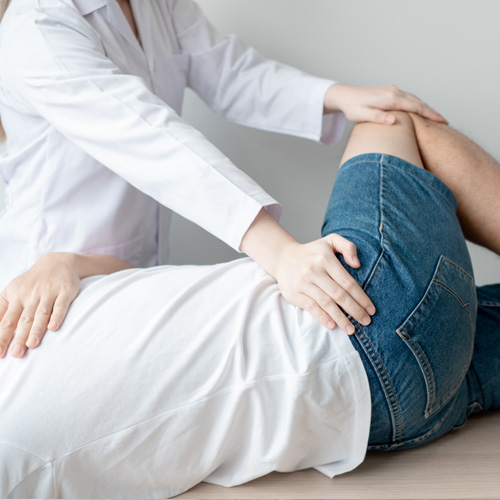
Why Do My Hips Hurt? Common Hip Injuries and Conditions
Osteoarthritis (OA): If you’re an older adult, your hip pain might stem from osteoarthritis, which occurs when the cartilage in a joint starts to degenerate. The hips are one of the more common locations for OA. Symptoms include…
- Pain in the hip and/or groin
- Stiffness in the hip joint, especially after you haven’t moved it for a while
- A sense of weakness in your legs
Hip Impingement: Your hip is a ball-and-socket joint. When the ball part of the joint pinches up against the socket part, you can develop hip impingement. It’s most common in young, active people. Watch out for…
- Pain in the hip joint and discomfort elsewhere in the general area (groin, thighs, lower back)
- Sharp stabbing pain when using your hip (i.e., squatting, running, etc)
- Symptoms that gradually develop over time
Hip Labral Tear: Your labrum is a ring of cartilage that protects your hip socket. A labral tear occurs when that cartilage tears, often due to overuse or a hip impingement. Symptoms include…
- A persistent, dull ache that feels like it comes from deep inside your hip
- Sharp, stabbing pains when using your hip
- Clicking or popping sounds when using your hip
- A feeling of instability in the hip
Hip Strain: A hip strain occurs when the muscles or tendons that support your hip joint become damaged. Your exact symptoms will vary somewhat based on the severity of the strain, but in general, you can expect…
- Pain, especially when using the affected muscle
- Swelling
- Limited range of motion
- Muscle weakness
Hip sprains can also occur, but they tend to be rare. A sprain affects the ligaments in your hip (the tissue that connects the joint). Symptoms are similar to a strain, but you might also experience a sense of the joint buckling under your weight.
What We Can Do to Address Your Hip Pain
Of course, identifying the cause of your hip pain is only the first step in addressing it. Once we know why you’re experiencing pain, we can develop a personalized treatment plan for your needs.
If you’ve suffered a hip injury, we’ll guide you through rehabilitation. Sometimes, physical therapy alone is enough to resolve the injury; other times, you may need medical intervention. Either way, here’s what you can expect:
- Drug-free pain management techniques (such as manual therapy)
- Early mobility work to help improve your range of motion
- Exercises to restore strength and stability
- Targeted balance and gait training
- Activity-specific training (especially if you’re an athlete)
If you’ve developed osteoarthritis, we can help you manage your symptoms and delay the progression of your condition. OA doesn’t have a cure, but physical therapy is considered a frontline treatment to help you avoid a total hip replacement. Your treatment plan may include…
- Manual therapy to help reduce pain and improve mobility
- A personalized exercise program to help you stay active (regular exercise is one of the best ways to manage osteoarthritis)
- Balance and gait training to help reduce your fall risk
- Activity modifications and other strategies to help you manage discomfort throughout the day
- Dry needling. When performing dry needling, our physical therapist will insert a sterile needle through the skin, into the underlying tendons, ligaments, or muscles that have been affected, in order to relieve pain, decrease muscle tension, and improve mobility.
- Deep tissue laser to help relieve pain, energize cells, and increase circulation to the injured area.
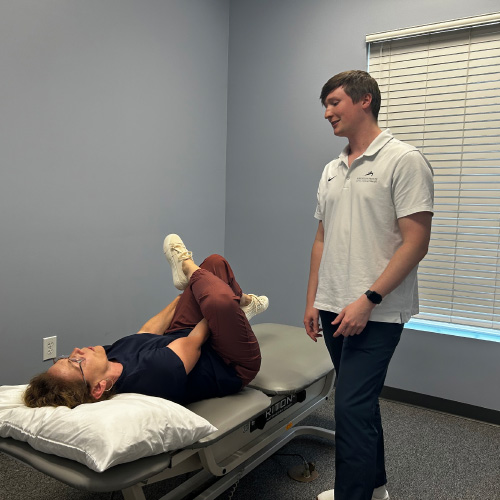
No matter the reason for your hip pain, the Taylor Rehab therapists will find a solution that works for you. Call us today to schedule an appointment to get started on your journey to hip pain relief!
Say Goodbye to Pain – Get Started with PT Now!
Return to Taylor Rehab and Let’s Continue Your Journey to Wellness Together. Schedule Your Appointment Now!
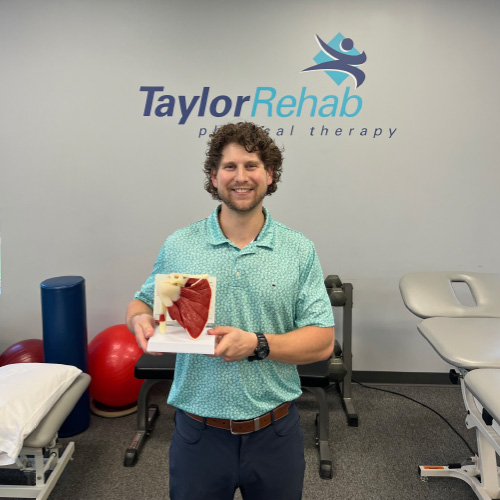
Upcoming Free Workshops
Free Shoulder/Rotator Cuff Pain Workshop
Saturday, June 14th
10:00 am
Thank You for Subscribing to Taylor Rehab
Exercise of the Month
CLAMSHELLS (EXERCISE BAND)
Lie on your side with knees bent and a resistance band around your thighs. Keeping feet together, lift your top knee without rotating your hips. Lower slowly and repeat to target the outer hips and glutes.

Taylor Rehab Reviews 🌟
Help us help more people in our community by leaving a Google Review
Patient Testimonial
“This was the BEST experience. I was reluctant to go because I had been living with pain for a few years. With John and Casey, they put me on the right path not just for recovery, but for the future. ”
-Monica T.
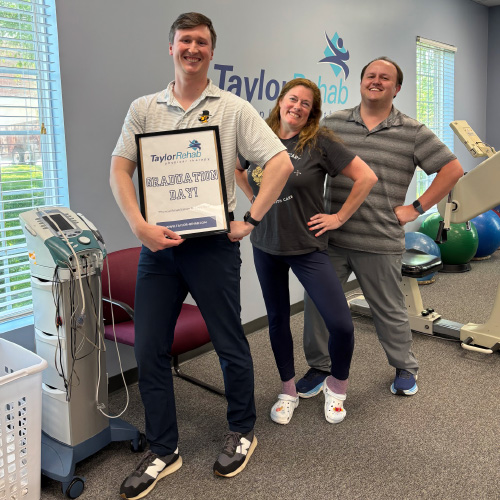
Follow Us on Social Media!

We Are Thankful For You, Moms!
A Mom is a woman who helps to set the standards, the family values and the example. Moms eagerly accept and cherish the role of creating a healthy, happy and successful environment for their kids. Who signs up for a job with zero pay?
You do!
So. Taylor Rehab wants to say thanks to all the Moms out there. We are offering FREE healthy movement screenings to all Moms in the month of June at our locations.
What is a healthy movement screening?
A 30-minute one-on-one appointment with a physical therapist. You can ask any questions about your aches and pains.
What do I get?
• A diagnosis – Find out what is causing your pain
• A prognosis – How long will it take to get back to normal?
• A plan – How your therapy can fix the problem without the side effects of medication, injections or surgery
Who is it for?
Any Mom who is suffering with…
• Lower back pain
• Arthritis
• Sciatica
• Neck pain
• Headaches
• Shoulder pain
• Knee pain
• Problems walking
Call Taylor Rehab now to schedule your free exam!