

May Word Scramble
awelwmrno
gyaubdl
mapdloi
wohessr
efalitsv
rnidarsop
Answer Key
lawnmower
ladybug
diploma
showers
festival
raindrops
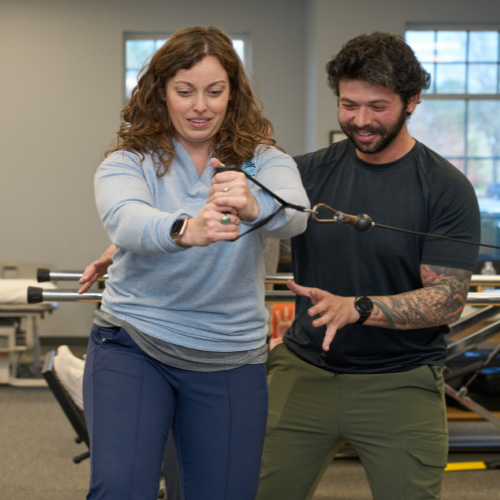
Easy Posture Fixes for Pain Relief
“Stand up straight!” has been a refrain from parents throughout the ages, but is it really that important? Actually – yes, it is!
Many people assume maintaining proper posture is about appearance: looking tall and confident. In reality, improper posture can cause pain in your neck and upper back and put pressure on your spine, leading to an increased injury risk.
But what exactly is proper posture? It probably won’t surprise you to learn that it’s more complicated than merely standing up straight. Instead, it’s more about finding the right spinal alignment for your body – and that’s something the physical therapists at Taylor Rehab can help you with!
Call us to schedule an appointment for your initial consultation!
If you’re struggling with persistent neck or back pain, it may be time to visit us for a postural assessment. We’ll help pinpoint any impairments or imbalances in your spine that might be causing problems and then provide strategies for maintaining your postural alignment throughout the day.
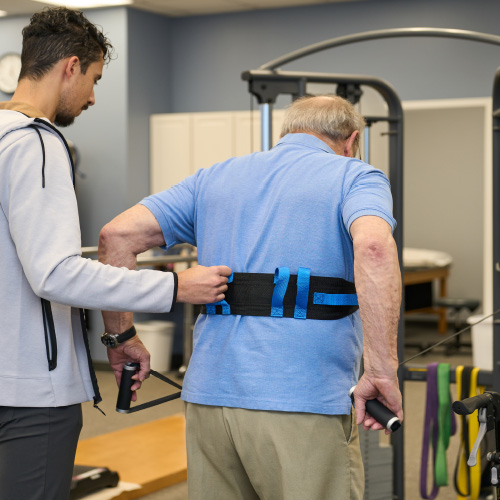
Understanding Proper Posture: Movement and Awareness is Key
Let’s get this out of the way first: There’s no universal “ideal posture” that will work for everyone. Even common advice like “stand up straight” isn’t particularly helpful: for one, no one’s spine is ever perfectly straight since it has a natural curve pattern. For another, you don’t spend your entire life standing still.
Rather than aiming for a non-existent “perfect” posture, you want to focus on two things:
- Postural Awareness: People don’t set out to have bad posture. You might start the day telling yourself you’re not going to slouch – but then, as you get busy with other tasks, posture becomes the last thing on your mind. By staying more aware of your posture, you can more easily adapt to the various positions you have to hold throughout the day.
- Avoid Prolonged Postures: Your body wants to move. Holding the same posture for extended periods (even if you’re sitting up straight and have everything in alignment) is still going to cause problems! Rather than aiming for a “perfect” posture, make sure to change your positions throughout the day. Alternate between sitting and standing. Switch positions. Get up and move around. In short – try to stay as active as possible.
The Relationship Between Posture and Pain
Neck and back pain have several potential causes and contributing factors. Improper posture is often one of them.
When you lose your postural awareness and start to slouch, it puts extra strain on the muscles that support your spine, particularly the muscles in your neck and upper back. This can lead to overuse injuries that cause pain or restricted mobility.
Remaining in prolonged postures (particularly sitting) also puts extra strain on your back muscles. When you get up and move around – even if it’s just for a few minutes – you relieve that pressure. Staying active also helps strengthen the muscles of your back and core, which helps prevent common musculoskeletal injuries that can cause pain and dysfunction.
Physical Therapy’s Role in Improving Posture
When you visit us for your appointment, here’s what we’ll do to help you improve your posture and reduce your back and neck pain:
- We start with a comprehensive postural assessment. We’ll take a look at your posture when you’re sitting, standing, and moving, looking for potential areas of dysfunction. We’ll also take a complete health history and might run some additional screens, too, testing for strength, mobility, balance, and more.
- We help with any acute pain. Manual therapy techniques and targeted mobility exercises can help relieve your pain and help you get your body’s function back.
- We help strengthen any weak muscles: Targeted strengthening exercises will help correct any muscular imbalances stemming from improper posture, providing better support and stability to your spine.
- We offer personalized postural corrections: The final piece of the puzzle helps ensure lasting relief. We’ll provide a customized postural improvement plan that speaks to your unique needs and impairments.
Start Improving Your Posture Today!
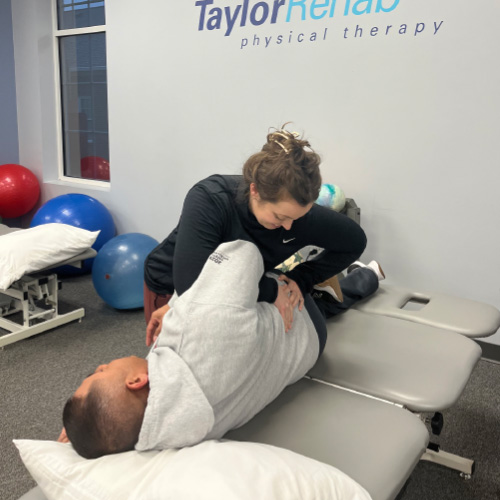
Fixing improper posture isn’t a one-and-done affair, but a visit to Taylor Rehab can help you get started. Call us to schedule your appointment today!
Say Goodbye to Pain – Get Started with PT Now!
Return to Taylor Rehab and Let’s Continue Your Journey to Wellness Together. Schedule Your Appointment Now!
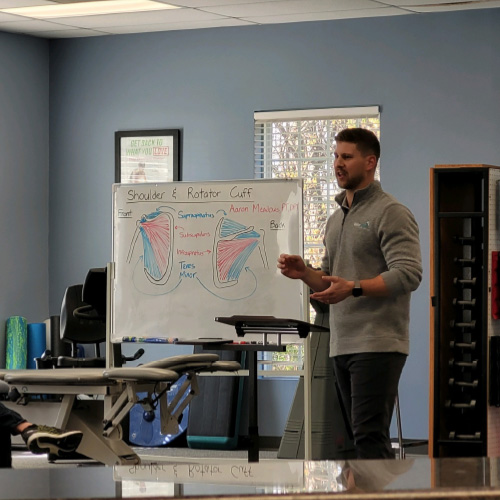
Upcoming Free Workshops
Free Shoulder/Rotator Cuff Pain Workshop
Wednesday, May 21st
5:30 pm
Thank You for Subscribing to Taylor Rehab
Welcome To the team!
Cole Bembenek, PT, DPT
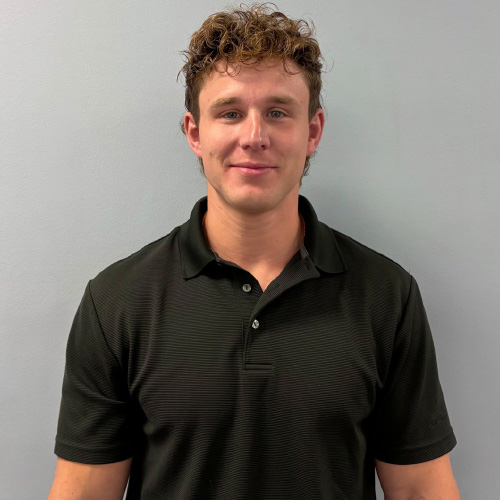
Cole is a dedicated and passionate physical therapist originally from Stevens Point, Wisconsin. He earned his undergraduate degree from the University of Wisconsin-La Crosse, where he developed a strong foundation in exercise science and rehabilitation. Following his undergrad, Cole pursued his Doctorate of Physical Therapy at Clarke University in Iowa, where he honed his clinical skills and deepened his understanding of patient care.
With a genuine commitment to making a difference in the lives of his patients, Cole believes in the power of personalized treatment plans that address each individual’s unique needs. He focuses on developing real, sustainable change through a combination of evidence-based practices and compassionate care. Cole’s approach emphasizes collaboration with patients, empowering them to take an active role in their recovery journey.
In his free time, Cole enjoys exploring various hiking trails in the area, seeking out local coffee shops, and exploring new restaurants. He also enjoys playing pickleball and spending quality time with friends and family in his free time.
Cole looks forward to partnering with you on your path to recovery and wellness. Whether you’re dealing with a specific injury or seeking to enhance your overall physical health, he is here to help you achieve your goals.

Taylor Rehab Reviews 🌟
Help us help more people in our community by leaving a Google Review
Patient Testimonial
“I am so grateful for the help with my shoulder. I wasn’t able to do much of anything when I began. Even getting dressed was difficult. Today, I walk away with a fantastic range of motion and almost no pain at all”
-Melissa F.
Follow Us on Social Media!
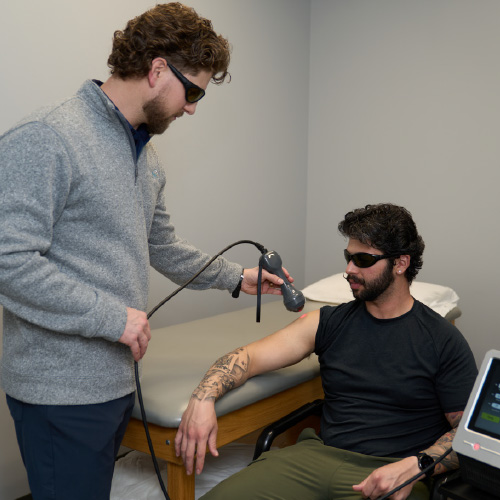
Service Spotlight: Deep Tissue Laser Therapy
Discover the benefits of deep tissue laser therapy at Taylor Rehab! We use a Class 4 laser that is a non-invasive, painless, and FDA-approved. This technique utilizes light in the 810-980 nm wavelength to reduce pain, reduce inflammation, and accelerate healing.
The skilled application of a therapeutic dose of light to impaired and dysfunctional tissue results in an 18-24 hour process of modulated cellular activity known as photobiomodulation.
At Taylor Rehab we offer class IV laser therapy which is a higher-powered delivery system with more efficient delivery of light to deeper tissues than previous class I, II, III “cold laser” treatments. It affords the clinicians the ability to efficiently deliver adequate doses of light to deeper tissues and larger treatment areas with greater cellular change than lower-powered lasers.
When Should Laser Therapy Be Used?
Laser therapy can be used to treat the following acute and chronic conditions and more:
- Neck Pain Relief
- Shoulder Pain Relief
- Back Pain and Sciatica Relief
- Arthritis
- Bursitis
- Disc Injuries
- TMJ
- Sports Injuries
- Plantar Fasciitis
- Carpal Tunnel Syndrome
- Migraines
- Soft Tissue Damage and more
Before determining your treatment plan, one of our dedicated therapists will conduct a physical evaluation and assessment of your medical history in order to diagnose your condition and decide which treatment options will best benefit you. Call our clinic today to get started!