

4th of July Word Scramble
cemarai
elidtrncoaa
orkrfsiwe
ddieceenpenn
uraeecbb
beiyltr
Answer Key
america
declaration
fireworks
independence
barbecue
liberty
Strength Training Helps You with Osteoporosis
Do you ever find yourself worrying about your bone health? Perhaps a family member has been diagnosed with osteoporosis, or maybe you’ve noticed a slight decrease in your height or stooped-over posture. It’s natural to feel concerned, but the good news is that there are effective ways to manage and even improve bone health. One such method that is gaining increasing recognition is strength training with physical therapy.
Create Your Own Path To Stronger Bones
The Connection Between Osteoporosis and Strength Training
Osteoporosis is a condition characterized by decreased bone mass and density, leading to increased bone fragility and a higher risk of fractures. It affects millions of people worldwide, particularly women after menopause.
Causes of Osteoporosis
The causes of osteoporosis are complex and multifaceted and often include the following:
- Hormonal Changes
- Age
- Genetics
- Gender
Risk Factors
- Family history of osteoporosis
- Low calcium intake
- Vitamin D deficiency
- Smoking
- Excessive alcohol consumption
- Sedentary lifestyle
Symptoms
Osteoporosis can remain asymptomatic until a fracture occurs. However, there may be subtle signs, such as:
- Gradual height loss
- Stooped posture
- Increased susceptibility to fractures, even from minor falls
If you suspect you may have osteoporosis or are at risk, it’s crucial to seek medical evaluation and guidance.
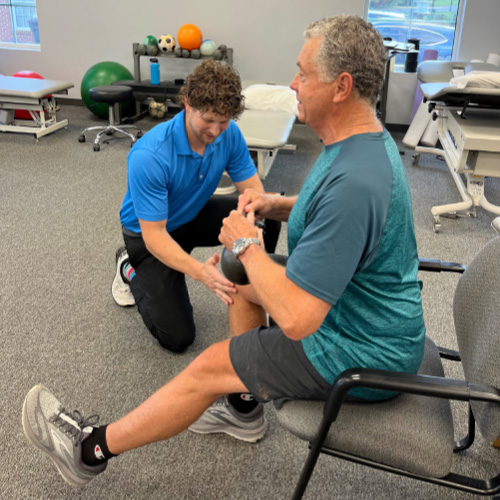
Strength training with physical therapy techniques involves using weights, resistance bands, or body weight to challenge your muscles and bones. When you engage in strength training exercises, you create a mechanical load on your bones, stimulating bone cells called osteoblasts to build new bone tissue, which increases bone mass and strength. Furthermore, strength training improves muscle mass and balance, which helps reduce the risk of falls and fractures.
Personalized Strength Training Program For Osteoporosis
A 75-year-old woman came to our clinic after being diagnosed with osteoporosis. She had a noticeable decrease in her height and a family history of osteoporosis. She was anxious about the possibility of fractures and falls and was eager to find ways to improve her bone health.
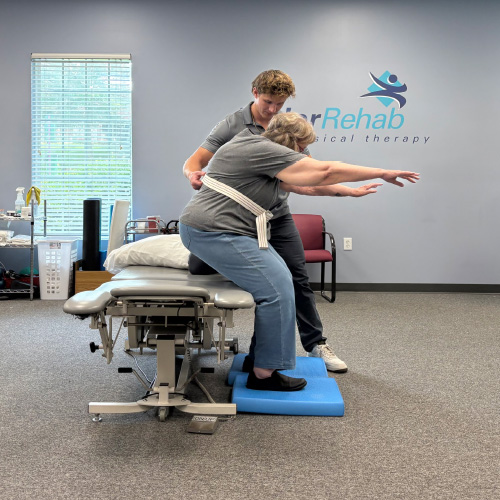
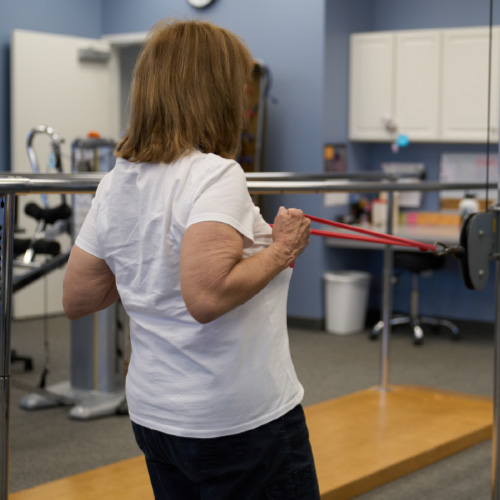
Our physical therapists worked with her to develop a comprehensive strength training program. She started with low-impact exercises using resistance bands and gradually progressed to using weights and bodyweight exercises. Her program focused on strengthening her hips, spine, and core muscles, improving her posture, and increasing her overall strength and balance.
Over time, she noticed significant improvements in her strength and posture and also felt more confident and empowered. Strength training helped to improve her physical health and left a positive impact on her mental and emotional well-being.
Strength Training For Osteoporosis at Taylor Rehab
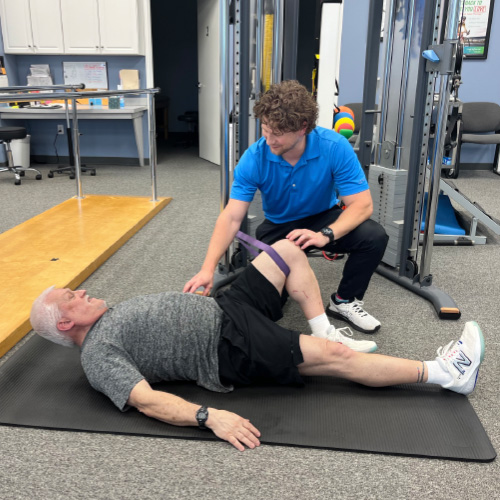
Incorporating strength training into a physical therapy program with our dedicated professionals is a safe and effective way to manage osteoporosis. We will conduct a thorough assessment, considering your medical history, current symptoms, and fitness level. Then we’ll design a personalized exercise program that targets specific muscle groups, focuses on proper form and technique, and gradually progresses in intensity as your strength and endurance improve.
If you or someone you know is struggling with osteoporosis, don’t wait any longer to schedule the first appointment. Our team of experienced physical therapists is here to help you enhance your well-being with stronger bones and improved mobility through a personalized treatment plan that addresses your specific needs and goals.
Remember, it’s never too late to take control of your bone health. Call us today to schedule an appointment and start building a stronger, healthier you!
Say Goodbye to Pain – Get Started with PT Now!
Return to Taylor Rehab and Let’s Continue Your Journey to Wellness Together. Schedule Your Appointment Now!
Upcoming Free Workshops
Free Shoulder/Rotator Cuff Pain Workshop
Wednesday, July 23rd
5:30 pm
Service Spotlight: Deep Tissue Laser Therapy
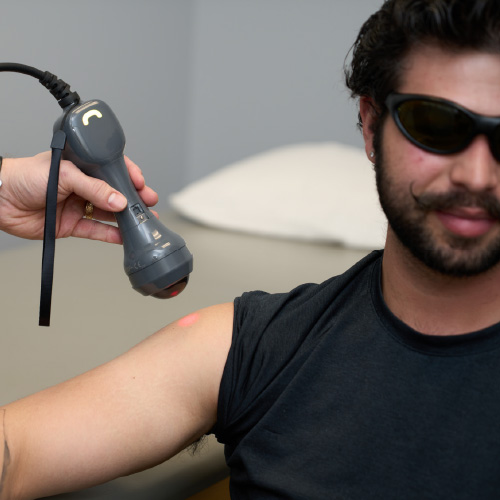
Laser therapy is a treatment offered at Taylor Rehab Physical Therapy for its safe, effective, and non-invasive way to treat pain and aid in the recovery of many conditions. We offer Lightforce Class 4 Deep Tissue Laser Therapy at both of our Mooresville locations, Gateway Blvd and Morrison Plantation. Laser treatments work by releasing photons into the tissues surrounding the affected area that is being treated. These photons help in relieving pain, energizing cells, and increasing circulation to the injured area.
When should laser therapy be used?
Laser therapy can be used to treat the following acute and chronic conditions and more:
- Neck Pain Relief
- Shoulder Pain Relief
- Back Pain and Sciatica Relief
- Arthritis
- Bursitis
- Disc Injuries
- TMJ
- Sports Injuries
- Plantar Fasciitis
- Carpal Tunnel Syndrome
- Migraines
- Soft Tissue Damage and more
Ready to get started? Call today and start living pain-free!
Thank You for Subscribing to Taylor Rehab
Exercise of the Month
SQUATS
Stand with feet shoulder-width apart and arms in front of you. Lower your hips back and down as if sitting into a chair, keeping your chest up and knees behind your toes. Push through your heels to return to standing.

Taylor Rehab Reviews 🌟
Help us help more people in our community by leaving a Google Review
Patient Testimonial
“Everyone at Taylor Rehab was so friendly and helpful. They got me to be able to use my knee again. I would recommend them! ”
-Carol C.
Follow Us on Social Media!
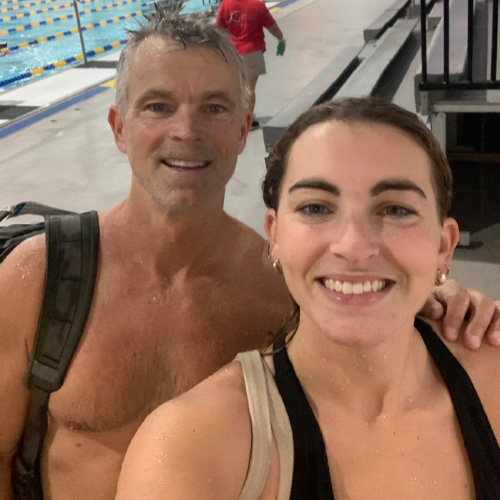
5 Pool Exercises For a Full-Body Workout
Exercising in water can provide a great full-body workout without some of the drawbacks of land-based exercises.
1. Walk in water. It targets your arms, core, and lower body. Keep your arms in the water and move them as you walk. Engage your core and stand tall.
2. Water arm lifts. Using foam dumbbells will help add more resistance. Stand in water up to your shoulders. Hold the dumbbells at your side, with your palms facing up. Draw your elbows in close to your torso as you lift your forearms to the height of the water. Rotate your wrists to turn your palms facedown. Lower your arms back to the starting position. Do 1-3 sets of 10-15 reps.
3. Lateral arm lifts. This exercise, which targets your upper body, is also best done with foam dumbbells. Stand in water up to your shoulders. Hold the dumbbells at your side. Raise your arms to the side until they’re level with the water and your shoulders. Lower your arms back down to your sides. Do 1-3 sets of 8-14 repetitions.
4. Back wall glide. This exercise helps to activate the muscles in your core and lower body. Hold onto the pool ledge, tuck your knees into your chest, and press your feet into the wall. Push off from the wall and float on your back as far as you can. Draw your knees into your chest, press your feet down to the bottom of the pool, and run back to the wall. Continue this exercise for 5-10 minutes.
5. Leg kicks. This exercise works the muscles in your core and legs. Use ankle weights to make it more challenging. Hold onto the pool ledge or hold a kickboard. Alternate flutter kicking, scissor kicking, breaststroke kicking, and dolphin kicking. Do each kick for 1-3 minutes.
Water workouts are an effective way to boost your cardio fitness while strengthening your major muscle groups, but as with any new exercise program, always speak to your physical therapist first. Contact Taylor Rehab to see if aquatic exercise is right for you!